
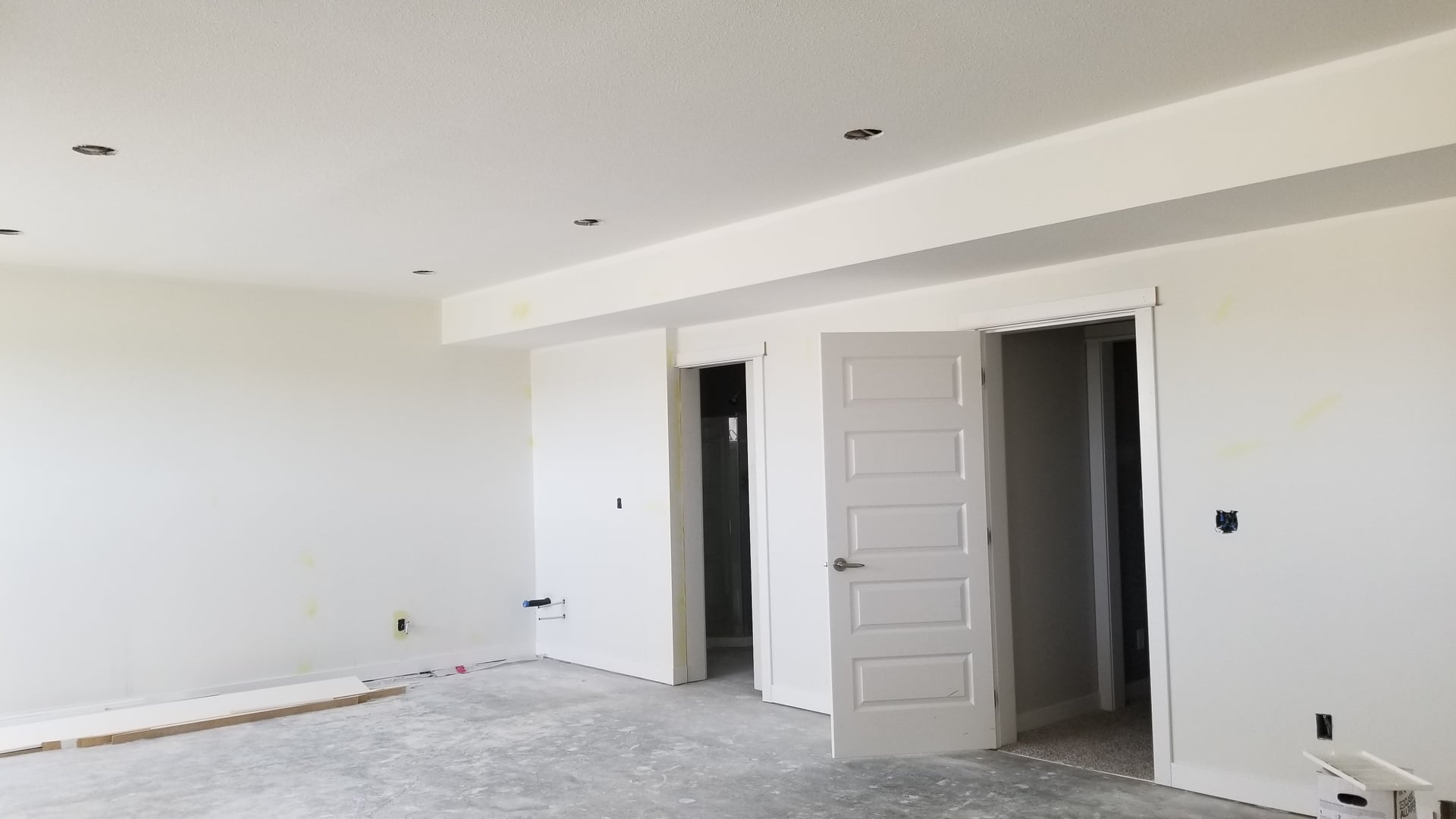
1. Start with your why
Think of your basement not just as “extra space” but as a chance to bring something new to your home. Maybe it’s a cozy home theatre, a playroom for the kids, or a rental unit for extra income. Getting clear on why you’re doing this will help guide every decision—budget, layout, finishes.
2. Plan & permit early
Before you swing a hammer, you’ll want a solid plan in place—and that means both design and approvals. In Airdrie, for example, there’s a specific checklist you must follow when you apply for a permit.
Basement Development Guidelines Airdrie
Some of the required items:
- Indicate door sizes (bathroom doors at least 30″, utility rooms at least 32″)
- Show where smoke alarms go (in each bedroom and the hallway serving it)
- Window size/type for bedrooms (important for egress)
- Indicate structural changes (removing/relocating load-bearing walls)
Basement Development Checklist
Getting the permit right means lower risk of surprises later (“Oops, we have to rip this out.”) and peace of mind that the job is recognised by the city.
3. Think about layout & building codes
Once you’ve got your “why” and you’re clear on the big picture, zoom into the practical stuff. Things like: ceiling height, egress windows, utility-room access, heating/ventilation.
Here are a few key considerations:
- If your basement includes a bedroom, the window must open for ventilation and emergency exit. For Airdrie, the openable area must be at least 0.35 m² (3.8 sq ft) and no dimension less than 380 mm (15″) and you need a window well clearance of at least 760 mm (30″) in front. Permits For Basement Development
- Utility room/door access: For example, doors into mechanical/utility rooms must meet size minimums in the permit documents.
- Heating & ventilation: Make sure the finished space is insulated, heated, and ventilated just like the rest of your home — basements shouldn’t be forgotten.
4. Choose how you’ll use the space
You’ve got lots of options. Some of the more popular ones:
- Bedroom + bathroom: Great for guests, older kids, or potential rental income.
- Spacious open “hang-out” zone: Maybe a family room, media space, home gym.
- Mixed use: e.g., living area plus small bar/kitchenette, maybe a guest suite.
Your choice impacts everything: plumbing, soundproofing, ventilation, fire-safety requirements, and finally cost.
5. Sound & comfort matter
When you finish a basement, you’re bringing that space into the daily life of your home. That means comfort, acoustics, and quality count.
- Insulate walls and ceilings so the basement feels like part of the home—not like a cold “downstairs”.
- Consider sound separation if you’re doing a bedroom or rental space (so noise upstairs/downstairs doesn’t interfere).
- Floor/ceiling finishing: Keep heating costs in check; make sure the space is cozy.
6. Don’t skimp on safety & code-compliance
This one’s critical. Whatever your vision, it has to meet building code, fire safety, egress requirements, etc. For example:
“Final inspections for electrical are mandatory. A final inspection for building, HVAC, plumbing & gas may also be required depending on scope.”
“All window wells serving bedrooms must have a minimum depth of 760 mm (30”). *Most existing window wells will not meet this requirement and modifications will be required.
So keep these in mind right from the start. As the saying goes: do it once, do it right.
7. Budget thoughtfully (but allow wiggle-room)
Finishing a basement is an investment. The final cost depends heavily on your finishes, how much plumbing/HVAC changes you need, whether there are structural issues, etc. If you’re adding bathrooms or rental spaces, costs go up.
It’s smart to:
- Get at least a few quotes (make sure they include permit/inspection allowances)
- Keep a contingency (say 10-15%) for “oh by the way” items (hidden issues, finishing upgrades)
- Think of value: A well-finished basement adds to your home’s value—but it has to be done properly.
8. Choose your team & manage the project
Even when you’re hands-on, you’ll likely be working with trade contractors (electrical, plumbing, HVAC). A few tips:
- Ensure contractors are licensed/trade-qualified (especially for mechanical/electrical) — this is a city requirement in Airdrie.
- Set expectations: timelines, inspections, scope of work.
- Monitor progress: ensure inspections happen before walls/insulation get covered up. For instance: “Inspections are required prior to insulation or drywall being hung, once all rough-ins including framing, HVAC, electrical, plumbing and gas are complete.”
9. Visualise the finish & make it your own
This is where the fun happens: flooring, lighting, layout tweaks, maybe a wet bar or custom built-ins. Don’t forget:
- Lighting is especially important in basements (often fewer windows).
- If you’re planning a rental or separate suite: you may need extra considerations (entertainment equipment, extra bathroom/kitchenette).
- Even if you’re not renting, make it feel like part of the home. Warm finishes, good design = more enjoyment + better resale.
10. Finish strong & enjoy
Once inspections are done, the walls are painted, the flooring is in, and the lighting works — step back and enjoy the new space! Invite friends, make a plan for how you’ll use it, celebrate the upgrade.